
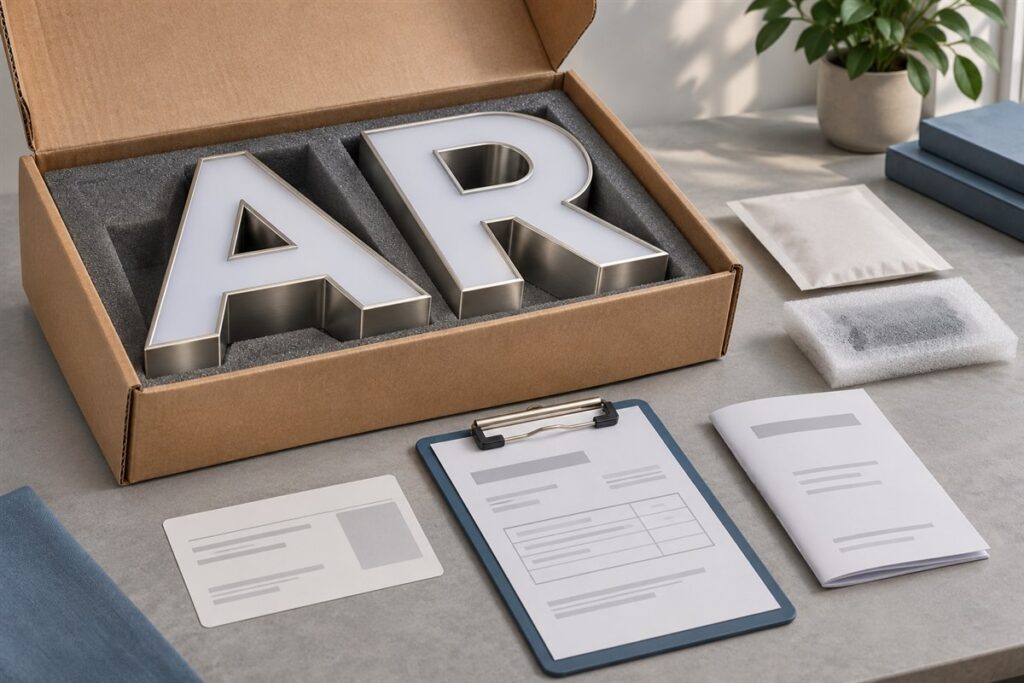
A reseller may request plain packaging because the signs are going straight to an end client. But a box without a factory logo answers only one question about the delivery. It does not establish what appears on the transport label, which commercial papers accompany the goods or what identification remains with the sign and accessories.
For an order of front-lit LED channel letters, settle the proposed presentation before choosing the receiving address. Ask whether the requested arrangements can be provided for this order. Terms such as “neutral,” “white-label” or “direct delivery” need an agreed meaning; none should be treated as a confirmed service merely because it appears in the brief.
Define the request for outer promotional branding
Say what you mean by neutral outer packing. Are you asking about a printed factory logo, branded tape or promotional inserts? Separate those preferences from the packaging needed to protect the acrylic faces, metal surfaces and supplied parts.
Ask for an answer about the actual proposed carton, crate or other packing arrangement. A photograph of one plain box does not describe every package in a mixed order. Identify any presentation request the supplier cannot confirm rather than assuming that “no logo” covers the whole shipment.
Review the other presentation layers separately
Transport information has a different purpose from promotional branding. For example, DHL’s shipping-document guidance says a waybill typically contains sender and receiver address and contact details. It also explains that further paperwork depends on the shipment. That is a useful reason to review the route and documents separately from the outside graphics.
Ask the carrier, broker or responsible project party to confirm what information applies to the proposed delivery. Keep identities, descriptions and required records accurate. A request for neutral promotional packing should not become a request to delete required information or make the paperwork describe a different transaction.
Use the table below to identify what has actually been confirmed. On a phone, swipe it horizontally to see all four columns.
| Presentation layer | Question to ask | Confirmation to retain | If the answer is still open |
|---|---|---|---|
| Outer promotional branding | Can the proposed packages use the agreed plain presentation? | Written description of logos, tape and promotional inserts covered | Do not extend an outer-box answer to the other layers |
| Transport sender and receiver details | What accurate identities and contact details will the route display? | Confirmation from the party preparing the shipment | Have the carrier or logistics party clarify the actual arrangement |
| Commercial papers | Which papers accompany the goods, and who receives the relevant copies? | Document plan reviewed by the responsible parties | Keep the direct-delivery decision pending while requirements are checked |
| Product, accessories and instructions | What identification and technical information will reach the receiver? | Agreed contents and the contact handling project support | Resolve the handover without losing identification or required instructions |
Choose from three actual decision states
The proposed presentation and route are confirmed. If the supplier and logistics parties have answered the relevant questions, decide whether that delivery meets the client handover you intend. Confirm the receiving contact and who deals with a delivery exception. Approval of the presentation does not replace the agreed protection, contents or delivery scope.
Only the outer packing is confirmed. Treat this as a partial answer. If labels, commercial papers or enclosed information remain unclear, do not describe the shipment to your client as anonymous. Return the outstanding questions to the people preparing those items before committing to direct delivery.
You prefer to receive the signs first. Receiving first may suit a project where you need to organize the client handover yourself. Ask for a practical plan covering the first receiving point and any onward delivery, including timing, additional handling and cost. Confirm the accurate documentation and responsibilities for that route; another receiving step is not permission to remove product identification or required information.
Keep the client handover usable
The final receiver still needs to identify the correct sign, accessories and project references. Agree how installation information will reach the responsible team and who the client contacts about an order question. Neutral presentation should not leave someone holding an unidentified accessory or unable to find the relevant instructions.
For multiple clients or sites, our multi-store allocation guide already covers matching packages and accessories to destinations. Keep that allocation alongside the presentation decision rather than replacing it. Likewise, use the quotation scope checklist for protection, delivery boundaries and included work; those are established requirements, not new benefits of a plain carton.
Send HLW SIGN your artwork, proposed receiving point and packaging-presentation questions. State whether you are considering direct client delivery or receiving first, and ask which arrangements can be confirmed for the actual order. Browse the buyer resources for other purchasing decisions.