
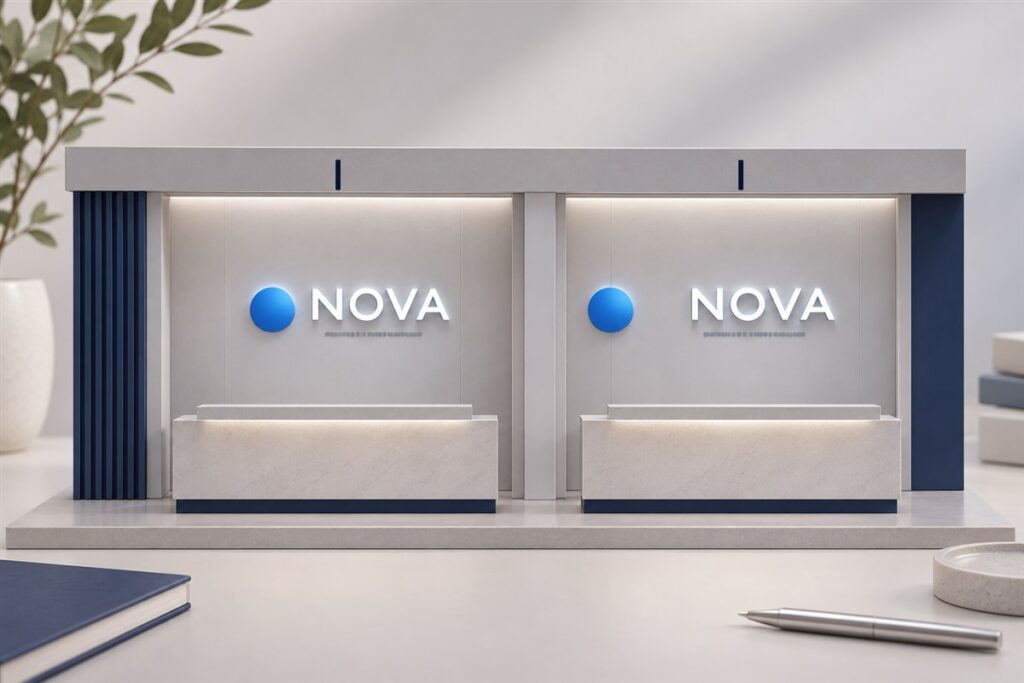
“Please center the logo” can describe several different layouts. One person may mean the complete composition, including an emblem beside the name. Another may want the main name centered above the reception desk, even though the complete composition then occupies an unequal area on either side. Name the intended relationship before accepting the proposal.
When ordering front-lit logo signs, identify which artwork group is the subject of that instruction and which site feature is its reference. Keep the approved artwork and proposed size consistent while reviewing placement. The question here is what you want aligned, rather than how large the sign should be.
Name the artwork group that should align
Mark the relevant groups on an identified review copy. The complete logo composition may contain an emblem, the main name and a smaller tagline. Give each group a simple reference that everyone can locate on the same artwork revision. An instruction about the main name should not depend on somebody guessing whether the emblem is included.
Distinguish positioning the complete composition from changing its internal arrangement. You can choose the main name as the alignment subject while retaining the approved relationship between that name, the emblem and the tagline. Moving individual elements within the logo is an artwork change that needs its own review. Do not let a placement discussion quietly change the brand composition.
Identify the site reference just as precisely
Choose the feature the sign should relate to: the defined visible wall area, a doorway opening, the front panel of a reception desk, or another expressly identified feature. “The wall center” is still ambiguous if one reviewer includes an adjacent recess and another means only the uninterrupted panel behind the desk.
Show the chosen reference on the applicable site view and describe its boundaries. If the desk is the reference, state whether that means its complete front or a particular visible section. Existing site information should support the design discussion. Our site-survey preparation guide covers the separate task of confirming the actual location and constraints; an angled photograph alone should not become a source of installation dimensions.
Compare two complete layouts before choosing
Consider a fictional composition with an emblem to the left of a main name and a shorter tagline below. Proposal A centers the complete composition over the identified desk reference. Proposal B centers the main-name group over that same reference, keeping the logo’s internal arrangement unchanged. These instructions can position the complete composition differently.
Ask whether the team can show the alternatives on an identified proposal. Compare them with the same artwork, proposed size and site reference, and decide which relationship expresses your intention. Neither the complete composition nor the main name is automatically the correct subject for every room.
If the wall and desk suggest different relationships, choose which one governs the layout. A general request to center the sign over both can conceal a conflict rather than resolve it. Record the alternative considered and why the selected relationship matters, such as relating the principal name to the reception position.
Make any optical adjustment an explicit choice
A designer may propose a visually adjusted placement for an asymmetric logo. Ask for that option to be identified separately, with its intended relationship explained. Compare it with the layout based on the named group and reference, then record which proposal you prefer. There is no universal adjustment amount that this article can assign to every emblem, wordmark and setting.
Also say whether the instruction concerns horizontal centering, a vertical relationship or both. Accepting one relationship does not automatically settle the other. Keep the choice attached to the actual proposal so a later reviewer can see what was selected.
Use a short alignment decision note
Copy this blank note into the review. Fill it with the actual artwork and proposal references. On a phone, swipe the table horizontally to see all four columns.
| Decision item | Select for this proposal | Reference to identify | Decision or open point |
|---|---|---|---|
| Alignment subject | [Complete composition / main name / identified emblem or other group] | [Artwork filename, revision and marked group] | [Selected group / clarification needed] |
| Site reference | [Defined wall area / doorway opening / desk section / other feature] | [Site view and clearly identified boundaries] | [Accepted reference / information still required] |
| Intended relationship | [Which center, edge or other stated relationship should align; relevant direction] | [Annotated proposal showing that relationship] | [Accepted relationship / unresolved choice] |
| Alternative or optical adjustment | [Alternative considered and any expressly selected visual adjustment] | [Proposal A/B or other actual version reference] | [Selected version, reason and remaining question] |
Add the buyer’s decision owner and date, together with any designer or site-team confirmation still needed. Keep an unresolved reference visible as a question. A note saying only “centered as discussed” loses the very distinction the review was meant to settle.
Send the chosen relationship with the artwork
Adapt this request: “Using artwork [file/revision] at the proposed size, please show [identified group] aligned to [explicit site reference] by [intended relationship]. Retain the approved internal logo arrangement. We selected proposal [reference] after considering [alternative]. Please identify any remaining design or site-information question before the layout is confirmed.”
Send HLW SIGN your artwork and alignment decision note, with the relevant site reference, proposed dimensions and delivery country. Ask which proposal records the accepted relationship for the order. Find related planning checklists in Buyer Resources.