
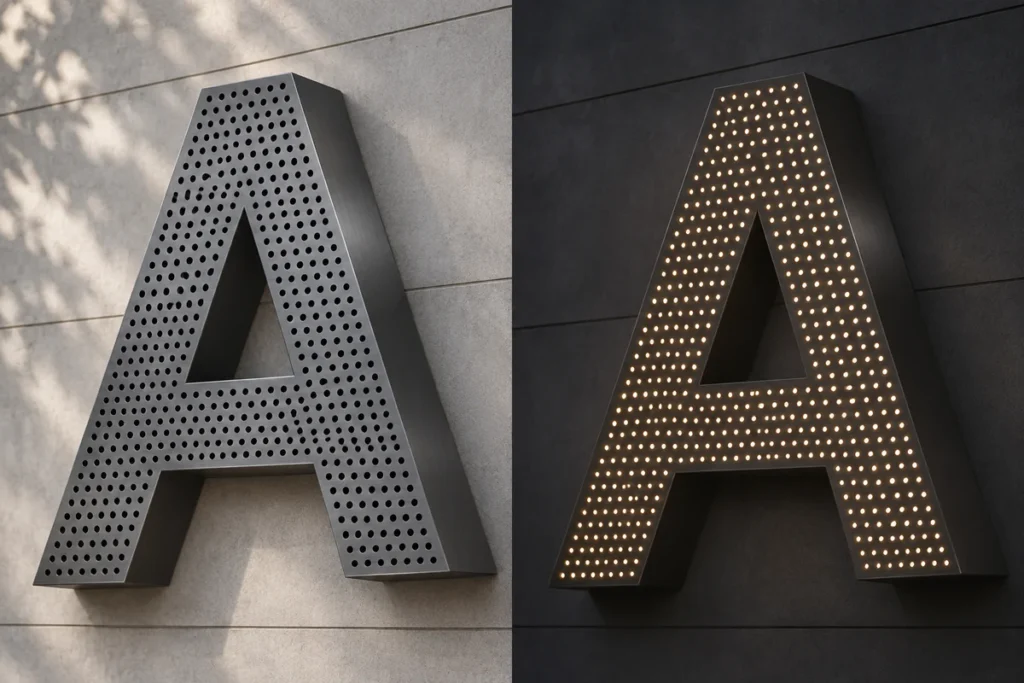
A perforated letter has two appearances to approve. With the lighting off, the buyer sees the metal, letter outline and hole pattern. When illuminated, points of light become part of the wordmark. A sample that looks attractive in one condition can leave important questions unanswered in the other. Before approving a custom order, record which features the sample represents, where it will be viewed and what changes still need agreement.
Start by identifying the perforated surfaces
The starry-sky LED letters shown in this collection use irregular perforations in a stainless steel form. For a face-perforated proposal, ask the team to mark the light-emitting holes on the front-view drawing. Confirm whether the returns also contain openings or remain a solid visible surface.
Products within the wider perforated LED channel letters collection can require different appearance decisions. Identify the construction in writing before comparing samples. Agree which letter or part of the logo best represents narrow strokes, broad faces, curves and closely spaced characters in your design.
Review the sign with its lighting off
Put the proposed metal finish and perforation layout in the same review. Ask for a straight-on view and the approach angles that matter at the intended location. Check whether the outline remains easy to recognize, whether the pattern feels balanced across the letter and how the visible edges and returns are finished.
Use specific finish descriptions. The worldstainless surface-treatment guide distinguishes brushed, satin and mirror finishes. Agree the actual finish reference for your order and show any required grain direction on the drawing. A finish name alone leaves the arrangement of the finished wordmark open to interpretation.
Review the assembled light effect separately
Ask for a representative illuminated section using the proposed face, returns and lighting arrangement. Record its drawing reference and the components or configuration it is intended to demonstrate. Confirm the proposed light color and operating setting rather than assuming every perforated letter supports the same effects or controls.
Look at the whole outline before inspecting individual light points. Discuss areas where the pattern appears too concentrated, too sparse or visually distracting. Use the actual proposed letter shape when an important stroke or logo detail might be lost. Ask which adjustments are possible and request an updated reference before approving a change.
Use an eight-point approval sheet
Share this worksheet with the people approving the brand appearance. Enter the agreed references in the final column; a general instruction such as “same as the picture” is difficult to apply when several images show different lighting or revisions.
| Check | Question to resolve | Record to retain |
|---|---|---|
| 1. Letter geometry | Does the sample represent the intended outline, stroke and spacing? | Artwork version and drawing dimensions. |
| 2. Hole location | Which surfaces are perforated, and is the intended pattern shown? | Marked front and side views. |
| 3. Daytime finish | Are face, returns and visible edges specified? | Finish reference and grain direction, where applicable. |
| 4. Unlit appearance | Can the wordmark be recognized against the proposed background? | Unlit sample views with the background identified. |
| 5. Illuminated pattern | Are the visible light points and their distribution acceptable? | Approved lit view and operating setting. |
| 6. Viewing positions | Has the design been reviewed from the relevant approaches? | Agreed near, normal and oblique viewpoints. |
| 7. Sample limits | Which final features does this sample demonstrate? | Sample identification and any features still awaiting review. |
| 8. Final approval | Are the requested changes resolved in one current version? | Decision date, approver and approved drawing revision. |
Record the setting around the sample
Review against the planned wall or a representative background where practical. Include the expected viewing positions in the brief, such as a sidewalk approach and a closer entrance view. If the finished sign will be viewed beside other illuminated branding, explain that context to the team.
For remote review, request unlit and lit photographs of the same sample, with the lighting condition and viewing position identified. A short walk-past video can help communicate changing viewpoints. Keep the original files with the drawing revision. Photography supports the discussion; use a physical sample review when the team considers it necessary to resolve the appearance.
Control changes after the sample review
Changing the finish, pattern, letter size or proposed light arrangement can affect the appearance that was reviewed. Ask the manufacturer which changes require a revised demonstration. Mark each requested adjustment on the current drawing and identify who will approve the result. Keep unresolved items visible rather than treating approval of the metal finish as approval of the complete illuminated sign.
Confirm installation exposure, mounting interfaces and component requirements separately for the actual project. An appearance approval does not establish an outdoor rating or determine the site fixing system. Provide those requirements before the order configuration is finalized.
Questions buyers often ask
Can a small perforated sample approve a large logo?
Ask which features it represents. A section may demonstrate a finish or pattern, while the full outline, spacing or other letter shapes still need review on the drawing or another agreed reference.
Should I specify one hole size for every letter?
Discuss the intended effect and artwork with the manufacturer. Ask how the proposed pattern relates to the different strokes; approve the documented proposal rather than assuming a universal hole dimension.
What should I send for an initial proposal?
Send your vector logo or sign text, approximate overall dimensions, background photographs, intended viewing positions and delivery country. Describe the daytime finish and nighttime effect you want.
Prepare your perforated-letter brief
Request a perforated-letter proposal with your artwork and location photographs. Ask which representative sample and approval records are appropriate for your design so the daytime metal appearance and illuminated pattern can be agreed together.