
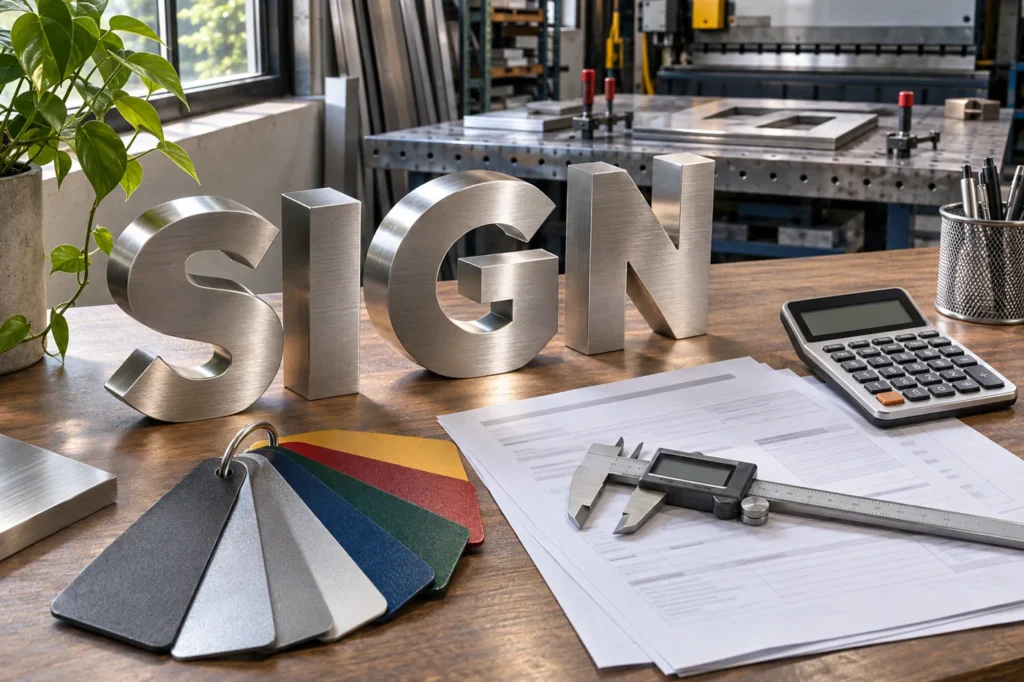
A low fabrication price and an inexpensive sheet of metal are not equivalent offers. One may include finished lettering and protective packing; the other is only a raw material that still needs design preparation, cutting, finishing and handling. A useful make-or-outsource comparison starts by defining the finished result and the responsibilities attached to it.
For a business supplying metal signs, the question is operational: which tasks can your team perform consistently, and which are better purchased from a fabricator for this project? The answer can change with the design, order quantity, workload and available equipment. There is no universal production volume at which one model automatically wins.
Define a comparable finished scope
Write down the actual deliverable before comparing numbers. Include the number and dimensions of the letters, the agreed finish, mounting interfaces, packaging and delivery destination. Decide whether artwork preparation, sample approval and installation information are included. A quote that excludes several of these items should not be compared directly with one that includes them.
Construction complexity matters as well as the visible size. A flat cut letter, a fabricated return and an embossed metal sign involve different processes. Ask which operations your workshop can complete with its existing equipment and experience. Treat any required new process as a planning item rather than assuming it will have the same labor pattern as familiar work.
Separate setup from recurring operations
The U.S. Small Business Administration distinguishes one-time costs from ongoing expenses when planning a business. That distinction is useful here without turning the comparison into an investment forecast. Equipment acquisition, tooling and the initial setup of a new process belong in a different category from the materials and working time associated with each order.
List recurring work in practical terms: preparing files, cutting, forming where required, finishing, inspection, packing and coordinating dispatch. Also record the time spent arranging outside processes. A workshop may carry out part of the sign internally while buying a specialist finish or illuminated assembly. Describe that mixed model clearly so the comparison reflects reality.
| Cost or responsibility | In-house question | Outsourced question |
|---|---|---|
| Process setup | What equipment, tooling or training is needed? | What setup or sample work is included? |
| Production work | Which operations use internal working time? | Which construction and finish are quoted? |
| Quality review | Who measures and approves the result? | What records and acceptance checks are agreed? |
| Packing and delivery | Who prepares and dispatches the sign? | Where does the supplier’s delivery scope end? |
| Installation interface | What information must your team prepare? | What mounting details accompany the supply? |
Include capacity and coordination
A process that fits the workshop technically may still compete with other customer orders for the same equipment or people. Ask when the work could actually be scheduled and what happens if a sample requires a revision. Include coordination time in your planning rather than treating all time outside cutting and assembly as free.
For custom led channel letters, fabrication also interacts with lighting specifications and electrical installation information. If the team normally produces non-illuminated lettering, this additional coordination should be recognized. It does not mean illuminated work must always be outsourced; it means the comparison needs to include the complete task rather than only the metal shell.
Compare acceptance criteria before comparing savings
A quoted finish name does not describe every visual detail. Agree the sample reference, acceptable appearance and inspection method so both supply options are working toward the same result. Establish who pays attention to measurements, finish consistency and any mounting components. A project can become more expensive through unclear expectations even when its initial price appeared attractive.
Keep sample approval and production authorization distinct. If the customer changes the design after a sample is accepted, update the scope and consider which operations must be repeated. Record revisions consistently whether the work is internal or external. This creates an understandable basis for discussing the order rather than relying on an old price for a changed product.
Make the decision project by project
Use a simple comparison sheet with the same rows for both models and mark any unresolved items. Avoid filling unknowns with optimistic guesses. Request clarification on packing, delivery and installation boundaries, and identify which internal resources would be committed. Your preferred model should be based on the scope your business can reliably deliver, not a general claim that outsourcing or ownership is always cheaper.
This framework is a way to organize operational information. Actual project costs depend on the design and commercial arrangements, so request a tailored quotation and use your own recorded workshop information when evaluating the alternatives.
Frequently Asked Questions
Is an outsourced sign always cheaper?
No. Compare the same construction, finish, quantity and delivery scope. Existing equipment and available capacity can make the result different from one project to another.
Can we make some parts and outsource the rest?
Yes, if responsibilities and interfaces are clear. Specify who prepares drawings, verifies dimensions, applies the finish, assembles the sign and approves the completed result.
What should be clarified before accepting a supply price?
Check the drawing revision, finish reference, quantity, sample work, packing, delivery destination and installation information. Record exclusions as clearly as inclusions.
Technical References
U.S. SBA: Startup Costs Worksheet; U.S. SBA: Calculate Startup Costs worksheet.
Discuss Your Project
Share your artwork, approximate dimensions, installation location and delivery country with HLW Sign. Contact our team for a project-specific review and quotation.