
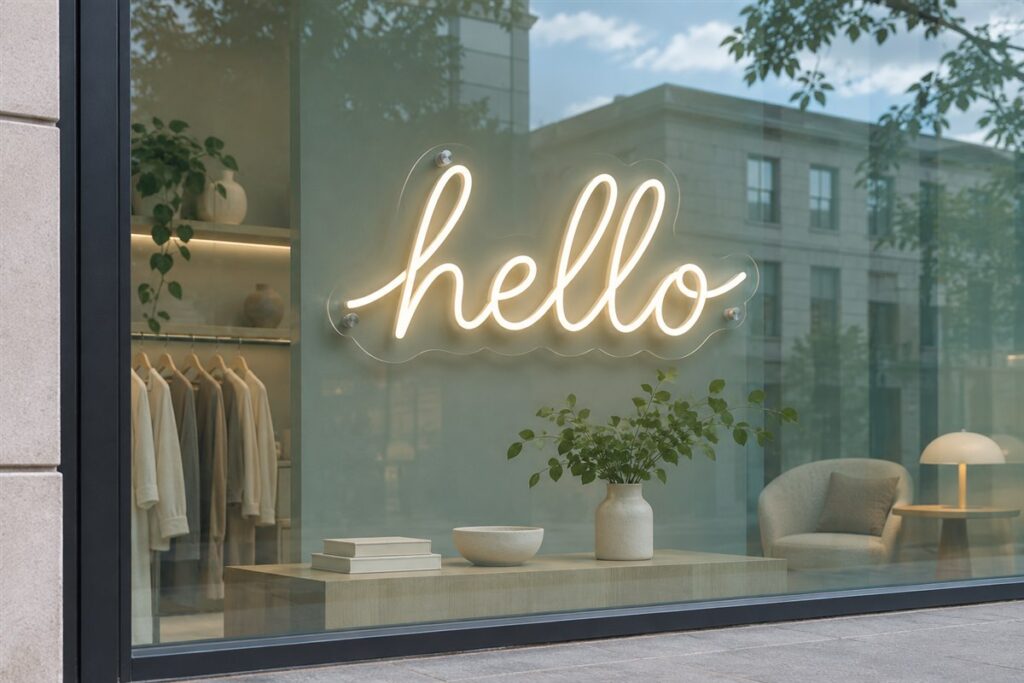
An LED neon sign approved on a workbench has not yet been reviewed through your shop window. If the sign will sit behind tinted glass, a coating or an added film, identify that glazing before accepting the street-facing result. Keep the bare-sign choice and the view through the installed window as separate decisions.
Our custom LED neon signs use an illuminated line and a backing panel. For a window proposal, the review should connect that identified sign configuration to the actual glazing between it and the intended viewer.
Identify the complete glazing at the proposed bay
Give the window bay a recognizable site reference. Ask the building owner or glazing specialist to identify the installed system, including the glass construction and any coating or added film. Request the applicable system record and clarify what is confirmed. A photograph or a film’s color name is not enough to identify the complete glazing.
Keep this information with the sign proposal. If performance data is provided, ask whether it describes an individual glass product or the complete installed arrangement. Where the existing construction is unknown, leave that question open and ask the responsible specialist what evidence is available. Do not quietly substitute data for a similar-looking pane.
Use the glass data to frame the review
Guardian Glass’s light-performance guidance distinguishes visible light passing through glass from light reflected by it, and describes differences among clear, tinted and coated glass. Visible light transmission, often abbreviated VLT, is a glass-performance measure. For this sign decision, treat it as context rather than a prediction that a particular message will be readable.
Guardian’s high-visibility glazing guidance also explains that coatings can change appearance, transmission and reflection. This is why the actual glazing reference matters when you discuss the sign’s visible color and line appearance. A generic clear-glass preview does not settle the result behind a different installed system.
Arrange a matched bare and glazed comparison where practical
Ask the sign supplier and glazing specialist whether a suitable comparison can be arranged safely. Where practical, review the same known sign candidate directly and through a glazing reference that the specialist identifies as representative of the installed system. Ask what that reference includes and what remains unrepresented.
Retain the artwork, proposed illuminated color, backing arrangement and actual sign state used for the review. Keep viewing and surrounding conditions consistent where practical, and record differences that could affect the comparison. If another sign configuration is proposed, give it a new candidate reference instead of treating two unrelated photographs as a glass-only comparison.
Where a matched comparison is unavailable, record that limit. The bare reference can still identify the sign you like, while the actual window result remains to be reviewed. Ask which site review or other relevant arrangement is possible before accepting the location.
Keep the two views beside the location decision
Write the window-bay ID and specialist-confirmed glazing reference above this worksheet. The cells are prompts, not results from a completed project. On a phone, swipe the table horizontally to see all four columns.
| Comparison reference | Direct view without glazing, if arranged | View through identified glazing | Decision or open point |
|---|---|---|---|
| Proposed sign candidate [ID] | [Sign configuration, review conditions and observed appearance] | [Glazing reference, corresponding conditions and observed change or uncertainty] | [Candidate acceptable through this system / further review needed] |
| Alternative candidate, only if requested | [Actual alternative and recorded conditions] | [Same identified glazing; note any other changed condition] | [Preferred candidate and reason / unresolved question] |
| Selected candidate at the actual window bay | [Linked direct-view record or stated limit] | [Street-side viewpoint, actual use condition and complete-message observation] | [Retain proposed location / request another proposal / pending] |
Return to the actual street-side view
Review the selected candidate through the installed window from the approach that matters to the shop. Look at the complete wording and intended line color in the real display, including reflections or window graphics present there. Use the relevant operating conditions already identified for the project.
Our neon placement and sizing guide covers usable space and repeated window-view checks. Here, connect that site observation to the identified glazing and sign candidate. A review through one bay should not automatically approve another bay whose glazing has not been confirmed.
Make an explicit location decision
If the complete view is acceptable, record the selected sign, glazing reference and location together. If it is not, describe what prevents acceptance and ask the team which alternative proposal can be reviewed. Keep the location pending until that option has been considered through the relevant glazing. Revisit the record if the specified glass system or film changes.
Send HLW SIGN your artwork, window-bay reference and glazing information, with the intended street-side view, display conditions and delivery country. Identify which result you have accepted and which comparison is still needed. Find other project preparation records in Buyer Resources.