
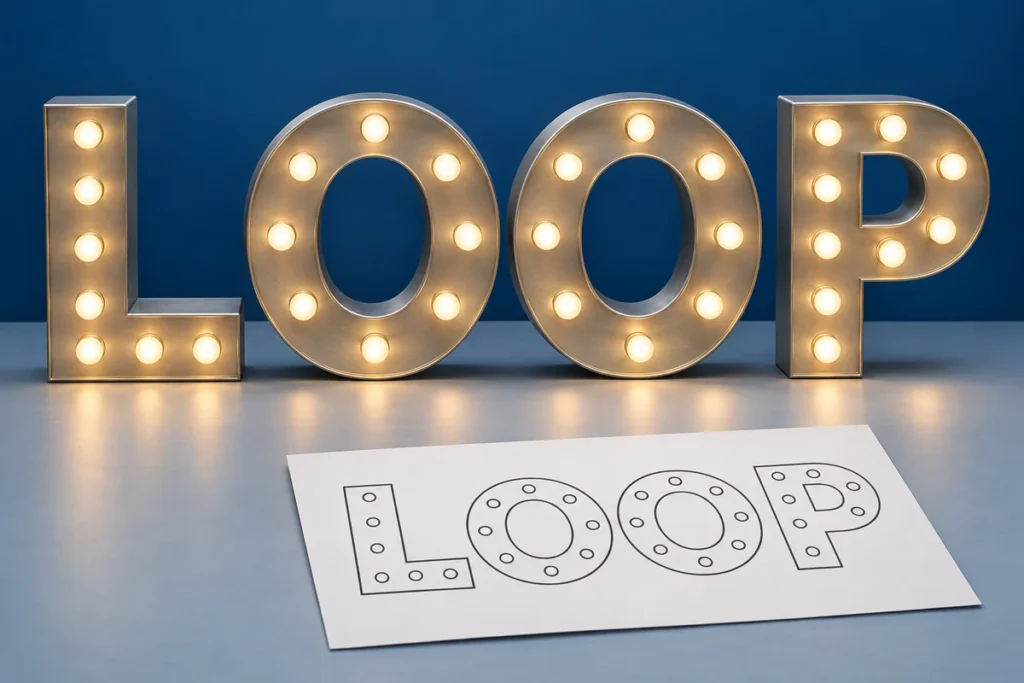
A close-up of one attractive marquee letter does not show how its bulb arrangement will work across a complete name. A broad character, a narrow stroke and a repeated letter create different questions. Before approving the display, ask to see the proposed arrangement on the actual wording rather than treating a single sample character as the whole design.
Our custom marquee letters combine visible bulbs with dimensional metal forms. Their appearance depends on the relationship between the character shape, bulb arrangement and finish. This guide focuses on one purchasing decision: recording the proposed visible-bulb layout so both buyer and manufacturer understand what is being reviewed.
Ask for a whole-word layout, not a bulb-count promise
Begin with the exact wordmark and the intended overall dimensions. Ask whether the manufacturer can provide a front-layout reference showing the proposed bulb positions within each character and the spacing between characters. Confirm what the reference represents: an initial concept, a proposed production arrangement or an illustration that still needs feasibility review.
A total bulb count does not tell you where the bulbs will sit or how the lettering will be arranged. Likewise, matching the count in two different letters does not establish that their patterns suit their shapes. Review the position pattern in context, and ask the team to explain any construction limits that affect the proposal. Do not assume every position in an inspiration image can be reproduced.
Compare characters by their role in the word
Use the following matrix beside the proposed layout. These are review questions, not rules for bulb spacing or instructions for designing an electrical system.
| Part of the wordmark | What to mark on the layout | Question for the manufacturer |
|---|---|---|
| Broad letters | The proposed route of bulbs around or within the visible face | Is this the proposed pattern for our actual character, or only a general reference? |
| Narrow strokes | Any area where the pattern changes from a neighboring broad stroke | What arrangement is feasible here, and how will the difference be shown for approval? |
| Curves and enclosed shapes | How the position pattern follows the supplied character outline | Which details need a closer drawing or representative example? |
| Repeated characters | The matching character references and any intended differences | Should these use the same arrangement, or is a deliberate exception proposed? |
| Space between letters | The complete wording with the proposed character spacing | Does this layout show the intended final arrangement, including separate words? |
For an illustrative example, consider a word containing two identical letters and one much narrower character. The useful question is not whether all three have the same number of bulbs. It is whether the proposed pattern for each is understood, whether the repeated forms are intended to match, and whether the complete grouping reflects the approved wordmark.
Keep the outline and bulb proposal visible together
Ask for the letter outlines and position markers on the same reference. A page of bulb dots without the corresponding character boundary is difficult to compare with the artwork. A separate close-up of one character should identify which letter in the whole-word layout it represents.
When a detail needs discussion, mark the area and describe the intended visual result. For example: “Please review the proposed pattern within this narrow stroke and show any alternative needed for the final construction.” This invites a specific answer without prescribing an unverified spacing, bulb size or internal arrangement.
If the team proposes changing a letter outline to accommodate the construction, request that change visibly on the wordmark. Keep the original and proposed versions available so the buyer can decide whether the appearance still fits the brand. An attractive isolated letter should not silently become permission to alter the complete logo.
Use a short configuration record for unresolved details
Maintain a small record alongside the layout. Give each open point a character reference, the question, the proposed answer and the related drawing revision. Keep unresolved items visible instead of allowing a general “looks good” message to stand in for an answer.
- Wordmark reference: exact artwork filename, overall dimensions and proposed arrangement.
- Bulb-layout reference: the dated drawing or illustration being reviewed and its stated purpose.
- Character exceptions: the specific strokes or repeated forms that need clarification.
- Proposed response: the manufacturer’s explanation and any revised detail.
- Buyer decision: accepted, revise or awaiting clarification, with the relevant reference attached.
This is a suggested buyer record, not a promise that every drawing, sample or custom arrangement is included in an order. Agree the approval material and any related charges before relying on it.
Send a request that identifies the actual decision
Adapt this request to the project: “For artwork [reference] at the proposed dimensions, please confirm whether you can provide a whole-word front layout with the intended visible bulb arrangement. Identify any character areas that need a different pattern or an outline change. Please reference repeated letters, show proposed character spacing, and tell us which details still require construction review before approval.”
Ask which drawing or other agreed record will identify the accepted arrangement for the order. Where photographs are supplied, request that they be tied to the relevant character and version; an unrelated finished-letter photograph should remain an appearance reference. Keep finish and lighting-component choices identified separately rather than assuming the position layout confirms them.
Turn the agreed layout into a complete project brief
Once the appearance questions are resolved, use the accepted wordmark as the reference for the remaining project discussions. Receiving dates, venue access and packing belong in a separate plan; our event signage logistics guide covers those questions.
Send HLW SIGN your marquee-letter brief with the actual wording, artwork, proposed overall dimensions, intended setting and delivery country. Include an annotated layout or reference image and explain which parts of the bulb arrangement matter most. Ask the team to confirm the feasible configuration and the approval information applicable to your quotation.