
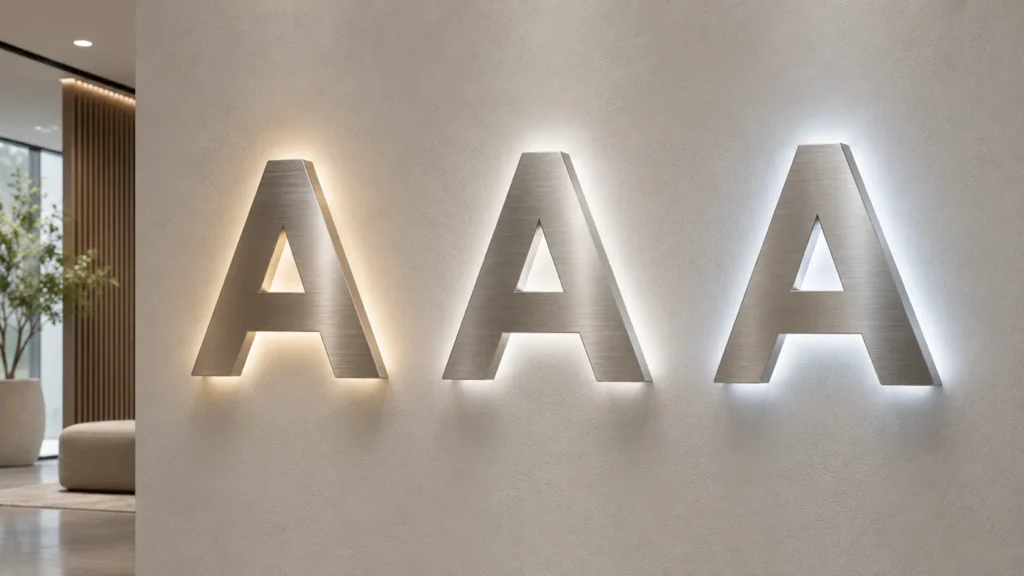
The color temperature of a halo-lit letter is best chosen with the installation surface in view. A warm-white sample on a neutral board can look different from the same sign against textured stone, painted timber or a colored wall. Rather than choosing a kelvin value from a screen alone, review the illuminated letter, standoff distance, wall finish and surrounding light as one visual arrangement. The goal is an approved appearance for your project.
Use kelvins as a starting description
Correlated color temperature, usually shortened to CCT, describes the apparent color of white light and is expressed in kelvins. Lower nominal values generally look warmer and higher values cooler. The U.S. Department of Energy’s CCT guidance explains that terminology. A value is useful for discussing the intended direction, but it should not be treated as a complete description of a finished sign’s color appearance or visual quality.
Consider the wall as part of the light effect
Halo-lit letters direct light toward the mounting surface, so the reflected result matters. Wall color, texture, gloss and nearby architectural details can influence the impression. Record the actual finish and provide a sample or a well-exposed photograph where practical. For halo-lit wall logo letters, discuss the proposed standoff and the available mounting space. Do not approve a halo pattern from a product image that uses a different wall and unknown exposure.
Compare samples under representative ambient light
Review samples with the intended room or exterior lighting represented. A reception area that looks calm in daylight may have stronger visual contrast after the surrounding lights are dimmed. Check the important viewing distances and angles, including reflections from polished surfaces. If several white-light options are available, compare them with the same letter construction and surface. Changing the LED color, backing distance and wall simultaneously makes it difficult to know which choice caused the difference.
| Decision | What to compare | What to record |
|---|---|---|
| White-light direction | Warmer, neutral or cooler appearance | Proposed nominal CCT and sample reference |
| Wall interaction | Actual color, texture and gloss | Finish code or physical sample |
| Halo shape | Letter construction and standoff | Approved drawing dimensions |
| Ambient conditions | Day and evening lighting where relevant | Review conditions and photographs |
| Repeatability | Approved sample versus future production | Component and revision references |
Keep CCT separate from color rendering
Two light sources can share a nominal CCT without reproducing colors identically or appearing identical in every context. DOE’s discussion of color-tunable LED products helps explain why different combinations of light can reach a similar nominal white. Ask which characteristics matter for your application. A decorative logo halo is not the same task as illuminating merchandise, and a preferred atmosphere does not establish every aspect of lighting performance.
Review the daytime face as well
The metal face remains visible when the light is off. Brushed, polished and coated finishes can change how the logo relates to its background. If lighting is not required, non-illuminated metal signs provide a separate design route. If the brand requires a bright letter face instead of a halo, review front-lit LED channel letters as a different construction. These alternatives should not be judged only by substituting a color-temperature label.
Approve a sample and keep the record
Keep the accepted sample reference, drawing version, wall finish and proposed nominal CCT together. Photographs are helpful for communication, but camera exposure and white balance can alter their appearance. For a repeat order or replacement, provide the existing specification and ask what can be matched. Avoid promising that every new batch will look identical to an aged installation without a practical review of the complete sign and site conditions.
Frequently asked questions
Is 4000K always the best option for halo letters?
No. A suitable choice depends on the wall, surrounding lighting and intended atmosphere. Compare the proposed options on a representative surface instead of relying on a universal “best” value.
Will a photo show the exact white color I will receive?
Not reliably. Camera white balance, exposure, screen settings and ambient lighting affect the image. Use the agreed specification and a physical sample when appearance is critical.
Does the wall finish matter as much as the LEDs?
It can be an important part of the effect because the halo is reflected light. Include the actual wall color, texture and mounting arrangement in the approval review.
Plan your sign with HLW Sign
Share your logo, wall finish and the atmosphere you want during day and evening use. We can review halo-letter construction and sample options for your proposed installation. Send your project details to discuss a suitable construction and quotation.